2019 · Public-health certification
22 May 2019: Algeria is certified malaria-free
WHO documents recognition that indigenous malaria transmission had been interrupted.
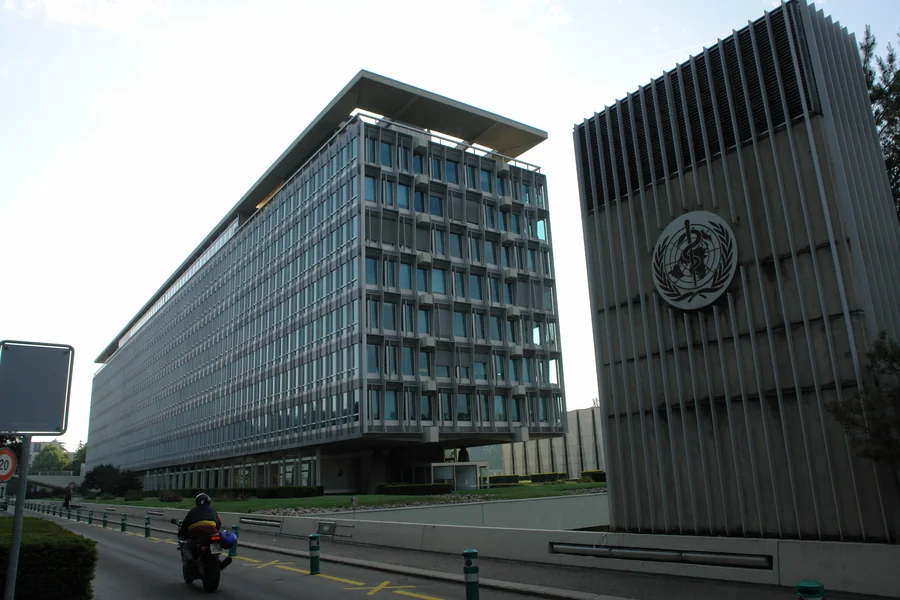
Source & licence
© Yann Forget / Wikimedia Commons / CC BY-SA 3.0
Source photograph · CC BY-SA 3.0
Full frame retained; proportional resizing and WebP conversion. Display fitted to the card frame. No generative retouching. Original licence retained.
Rights checked : 2026-10-10 · constitution-oms-1948
Context
Malaria has an important place in Algeria’s health history. WHO’s country account describes sustained national work, with surveillance responding to regional conditions and population movement. It reports the last indigenous case in 2013. That observation and the certification date are different: one concerns an epidemiological event, the other the completion of a verification process.
What happened
On 22 May 2019, WHO officially announced malaria-free certification for Algeria and Argentina. The certificates were presented on the sidelines of the 72nd World Health Assembly in Geneva. Algeria was the second country certified in the WHO African Region after Mauritius. This regional statement should not be extended to the entire continent without retaining the distinction between WHO regions and geography.
People and institutions
The institutional account names Algeria’s health ministry, the National Institute of Public Health and the Pasteur Institute of Algeria as essential national partners. It also records domestic funding, trained personnel and WHO’s technical support. Certification therefore recognises health-system work rather than a ceremony or an individual official alone.
Why it matters
Recognition requires demonstrated interruption of indigenous transmission for at least three consecutive years, together with surveillance and the capacity to prevent re-establishment. This is national elimination certification, not a declaration of worldwide eradication. Imported cases can remain compatible with the status when they do not indicate renewed indigenous transmission.
Consequences
An April 2021 WHO Africa release describes national mobilisation to preserve the achievement. It reports that the cases recorded in 2020 were imported. The document illustrates the difference between a certified country and the absolute absence of cases among everyone within its borders. Certification is recognition accompanied by continuing surveillance rather than an administrative end to all malaria-related activity.
What it means today
The institutional list consulted retains Algeria among countries certified in 2019; its displayed latest update is 15 July 2025. This entry records the 2019 milestone and does not claim to provide a 2026 epidemiological assessment. Its educational purpose is to distinguish the last indigenous case, certification, imported cases and indigenous transmission. No treatment regimen or diagnostic protocol is proposed.
Key points
- 22 May 2019: WHO announces official certification.
- 2013: the last indigenous case reported in WHO’s 2019 account.
- National elimination and global eradication are different concepts.
- Imported cases do not automatically indicate renewed indigenous transmission.
References
- Algeria and Argentina certified malaria-free by WHO
World Health Organization · Consulted 2026-10-11
- Algeria’s malaria-free certification
World Health Organization · Consulted 2026-10-11
- Maintenir l’Algérie certifiée exempte du paludisme
WHO Regional Office for Africa · Consulted 2026-10-11
- Countries and territories certified malaria-free by WHO
World Health Organization · Consulted 2026-10-11
Documentary review in French and English. Historical facts are distinct from current clinical advice.