1962 · Acceptance of the Constitution
8 November 1962: Algeria accepts the WHO Constitution
The United Nations treaty record confirms the date and describes the action as acceptance.
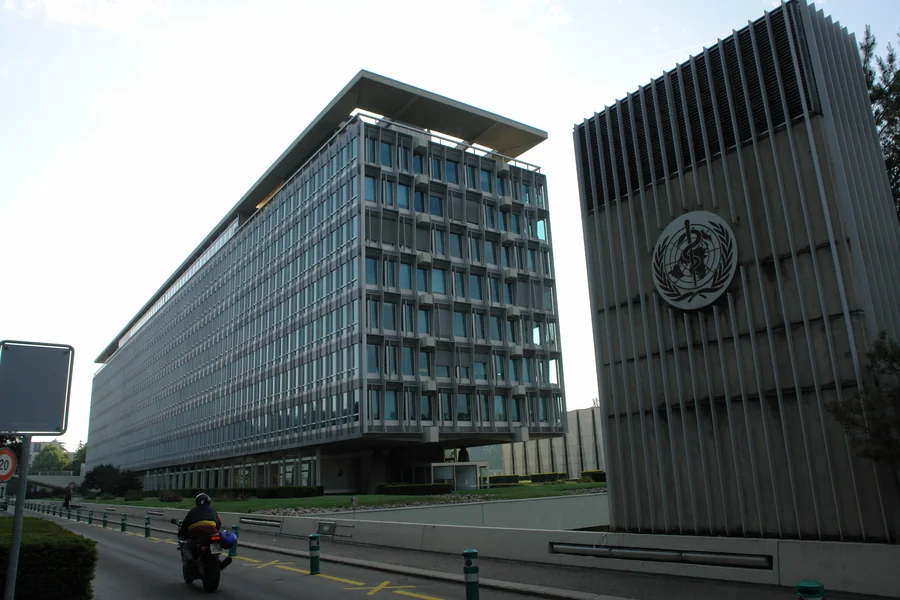
Source & licence
© Yann Forget / Wikimedia Commons / CC BY-SA 3.0
Source photograph · CC BY-SA 3.0
Full frame retained; proportional resizing and WebP conversion. Display fitted to the card frame. No generative retouching. Original licence retained.
Rights checked : 2026-10-10 · constitution-oms-1948
Context
The year 1962 is a major landmark in Algeria’s institutional history. Its relations with international organisations nevertheless require a precise chronology. Admission to the United Nations and participation in the World Health Organization are separate events. A United Nations archive establishes Algeria’s admission to the UN on 8 October 1962; this is not the date of its action concerning the WHO Constitution.
What happened
In the official record of WHO’s constitutive treaty, the Algeria entry gives 8 November 1962 and identifies the action as acceptance. The participant-status table also uses the letterA, defined in its legend. These two depositary presentations agree on the date and legal nature of the event. They support MICA’s existing entry without requiring a newly invented milestone.
People and institutions
The national actor was the Algerian State. WHO was the organisation concerned, while the United Nations Secretary-General served as the treaty’s depositary. The consulted record does not attribute acceptance to a particular physician, hospital or faculty. The event should therefore not be arbitrarily personalised or confused with the establishment of a national institution.
Why it matters
The Constitution provides for UN members to become WHO members by accepting the instrument through the specified procedures.8 November is therefore a documented landmark in Algeria’s participation in international health cooperation. Its significance is institutional. By itself, the record does not establish when an office opened, a programme began or a health project was implemented.
Consequences
The date provides an anchor for studying later cooperation. Each later stage needs its own evidence: an agreement, programme, report or archive. This method avoids compressing decades of health history into one date. It also demonstrates why verbs matter: accepting a treaty, joining an organisation and inaugurating a hospital describe different actions.
What it means today
MICA Histoire can include Algerian history through a verifiable primary record. This is documentary analysis rather than an inference of clinical effectiveness. It assigns no funding, professional responsibilities or outcomes that the treaty record does not mention. The precise acceptance label retains the earlier factual information while improving its traceability.
Key points
- 8 November 1962: acceptance of the WHO Constitution.
- 8 October 1962: UN admission, a separate event.
- The depositary identifies a legal action, not a hospital’s foundation.
- Later cooperation milestones require their own evidence.
References
- UN Treaty Collection — Constitution of the World Health Organization, registration 221
United Nations Treaty Section · Consulted 2026-10-11
- UN Treaty Collection — IX.1 participant status
United Nations Treaty Section · Consulted 2026-10-11
- Algeria: Declaration of acceptance of the obligations contained in the Charter of the United Nations
United Nations · Consulted 2026-10-11
- Constitution — Basic Documents, official English text
World Health Organization · Consulted 2026-10-11
Documentary review in French and English. Historical facts are distinct from current clinical advice.