1820 · Birth
12 May 1820: Florence Nightingale is born
A biography connecting nursing, hospital organisation and the interpretation of data.
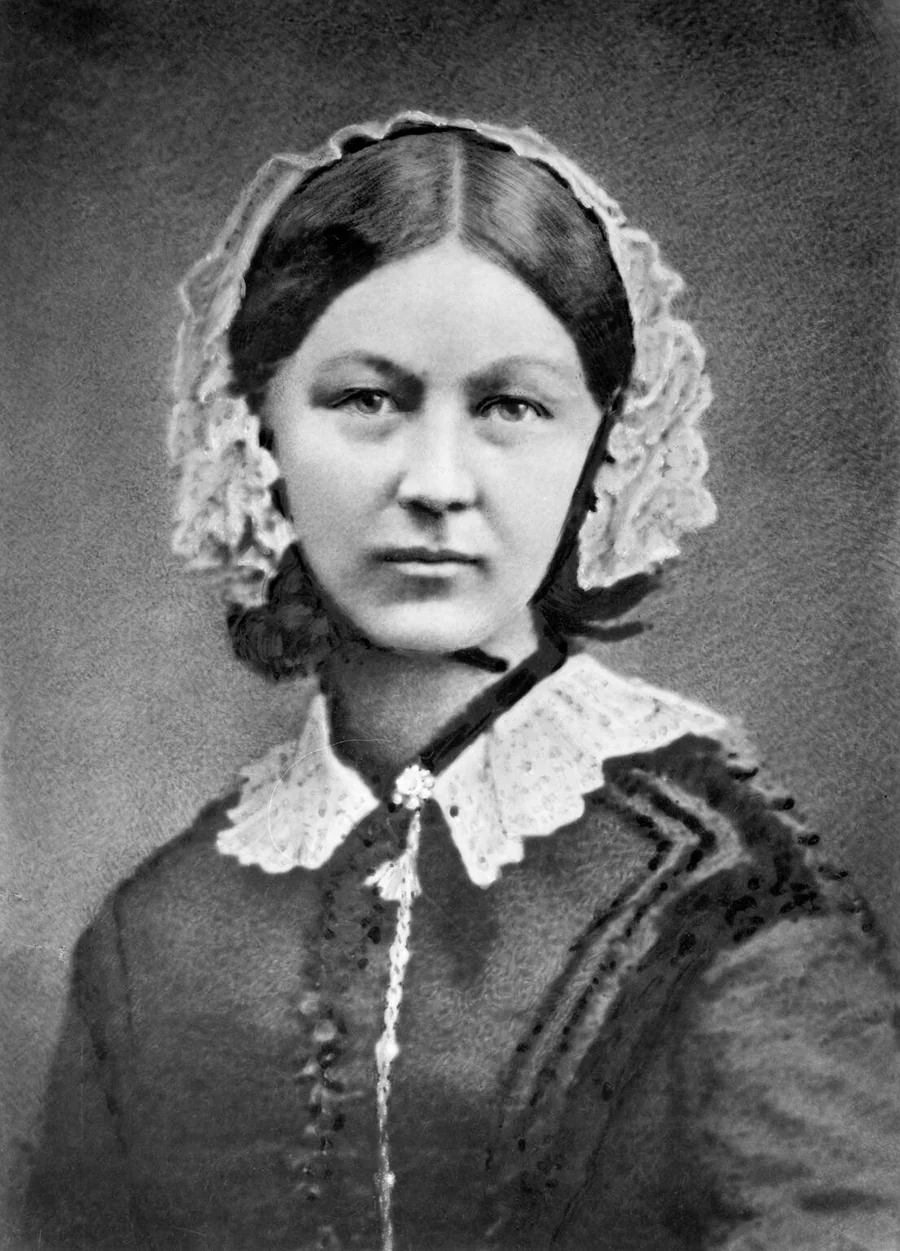
Source & licence
Henry Hering (1814–1893) / National Portrait Gallery, Londres, NPG x82368 / Wikimedia Commons
Source photograph · Domaine public · Public domain
Full frame retained; proportional resizing and WebP conversion. Display fitted to the card frame. No generative retouching. Original licence retained.
Rights checked : 2026-10-10 · naissance-florence-nightingale
Context
Florence Nightingale was born on 12 May 1820 in Florence during her parents’ travels. The museum preserving her legacy records the date and place in its Embley Park account. This anniversary is first a biographical event. It is not the beginning of the Crimean War, the foundation of her school or the publication of her work.
What happened
Born into a wealthy family, she received an education including mathematics and languages. The National Army Museum records nursing training in Germany in 1851 despite her family’s objections. Her subsequent engagement developed in a setting where women’s opportunities, working conditions and institutional organisation strongly influenced care. Her career belongs in that environment rather than a narrative of individual vocation alone.
People and institutions
In 1854, Nightingale travelled with a group of nurses to Scutari near Constantinople to care for Crimean War soldiers. Nurses, medical teams, military officials and those responsible for sanitary improvements operated within the same system. The familiar Lady with the Lamp image makes one person visible; hospital history also requires attention to the collective organisation.
Why it matters
Her work connected observation, mortality recording, analysis and arguments for reform. King’s College London highlights her statistical diagrams and role in professional education. The educational interest is the relationship between data and decisions: counting requires defining the observations and explaining what a comparison can actually support. An attractive figure does not remove the need to examine time periods, groups and the classification of causes.
Consequences
After her return to England, the Nightingale Training School opened at St Thomas’ Hospital on 9 July 1860, as King’s archives record. Education transmitted an organisation of care beyond a wartime experience. The National Army Museum also qualifies the heroic narrative: falling mortality at Scutari depended on sanitary improvements and should not be attributed to Nightingale alone.
What it means today
The photograph by Henry Hering, circa 1860, illustrates a later period of Nightingale’s life; it does not depict her birth. Her statistical diagrams of 1858 also offer an entry into the history of data. MICA presents a historical account of professionalisation and evidence, without turning nineteenth-century texts into current care recommendations.
Key points
- 12 May 1820: birth in Florence.
- The Crimean War and the 1860 school are separate stages.
- Hospital outcomes involve teams and material conditions.
- Statistical diagrams require their historical context.
References
- Spotlight on: Embley Park
Florence Nightingale Museum · Consulted 2026-10-11
- Florence Nightingale: The Lady with the Lamp
National Army Museum · Consulted 2026-10-11
- Florence Nightingale — Biography
King’s College London · Consulted 2026-10-11
- School celebrates 150 th anniversary
King’s College London · Consulted 2026-10-11
Documentary review in French and English. Historical facts are distinct from current clinical advice.