Birth · 4 November 1851
Birth of Hans Chiari, pathologist of the cerebellum and hepatic veins
The name Chiari appears in two specialties for very different lesions. In neurology it is associated with abnormalities at the junction between the brain and spinal canal. In hepatology, Budd–Chiari recalls the investigation of impaired hepatic venous outflow. The career of one pathologist connects these otherwise separate uses of his name.[1][2]
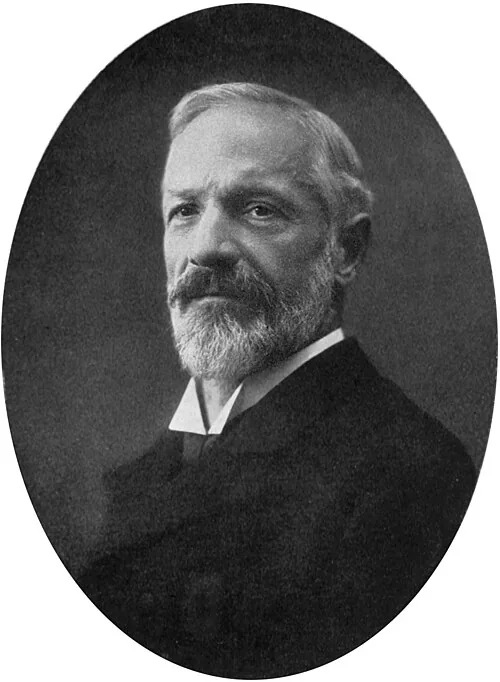
Credit and rights
Photographe non identifié · Wikimedia Commons · Public domain · redimensionnement proportionnel / proportional resize, WebP
Original source · LicenceKey dates and milestones
- 4 November 1851
Chiari is born in Vienna, where he later studies medicine and works with Karl Rokitansky.[1]
- 1882–1883
In Prague he teaches pathology and takes charge of the pathological anatomy museum.[1]
- 1891
He describes cerebellar abnormalities on anatomical examination. The classification bearing his name later evolves beyond these initial observations.[1][2]
- 1899
He publishes cases involving occlusive lesions of the main hepatic veins. George Budd had previously described obstruction of hepatic venous drainage.[1]
- 1906
He moves to Strasbourg as professor of pathology.[1]
- 1906–1916
Chiari continued his career in Strasbourg, teaching pathological anatomy until his death in 1916 following a throat infection.[1]
Contributions to medicine
- His pathology work relates clinical observations to the distribution of lesions. It helps explain the link between venous obstruction and liver injury, independently of his work on the nervous system.[1]
- For the malformations bearing his name, Chiari proposed an anatomy-based classification. The categories have since been debated and revised, but his descriptions supplied a durable vocabulary for comparing several configurations of the posterior fossa and craniocervical junction.[1][2]
- In his work on the hepatic veins, he combined personal observations with earlier literature. He related venous obstruction to congestion and liver lesions. This method illustrates both the power and the historical setting of descriptive pathology at the end of the nineteenth century.[1]
- Modern revision of his classification shows that eponyms do not freeze knowledge. They identify a historical starting point that imaging, clinical observation and later definitions have subsequently refined and sometimes reorganised.[2]
Documentary sources
- Hans Chiari · Biographie et publications originales
Life in the Fast Lane
- Classification historique des malformations de Chiari
PubMed · National Library of Medicine