Milestone · 4 November 1847
In Edinburgh, Simpson and his colleagues investigate chloroform
On the evening of 4 November 1847, an Edinburgh obstetrician and two colleagues observed the action of chloroform on themselves. Simpson was looking for an alternative to ether. The substance was already known to chemists. The experiment, its clinical application and the publication that spread the news were distinct steps in its history.[1][2]
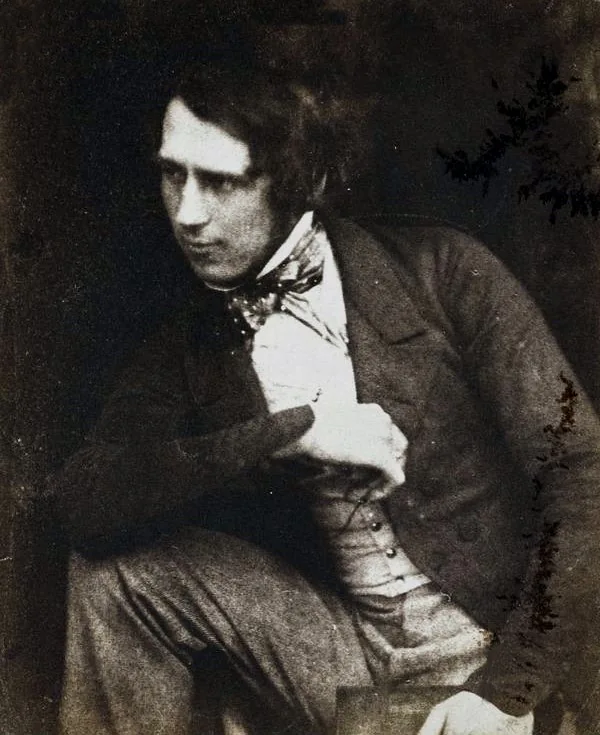
Credit and rights
Robert Adamson et David Octavius Hill · National Galleries of Scotland, via Wikimedia Commons · Public domain · redimensionnement proportionnel / proportional resize, WebP
Original source · LicenceKey dates and milestones
- 1831
Chemists produce chloroform. Its introduction into obstetrics lies ahead.[1]
- 4 November 1847
Simpson, Keith and Duncan experience its effects in Edinburgh. This date refers to the experiment involving the three men.[1][2]
- November 1847
Simpson publicises this use in medicine and midwifery. His account reaches readers beyond the Edinburgh group.[2]
- 1848
Historical accounts record a death under chloroform in January. Safety became a concern early in the adoption of the agent.[1]
Contributions to medicine
- By connecting an observation to a concrete obstetric question, the Edinburgh group helped broaden the uses of anaesthesia. The account also identifies Keith and Duncan, whose contributions can disappear when the episode is told through Simpson alone.[1][2]
- The episode broadened the history of anaesthesia beyond operative surgery. By asking a specific obstetric question, the group helped make pain relief a subject of clinical, technical and ethical discussion. Rapid circulation of the report gave a local observation international reach.[1][2]
- The fuller account restores an experiment conducted by three people. Keith and Duncan were not merely witnesses: they took part in the inhalation and observation. Simpson’s later fame has sometimes reduced this collective episode to one name.[1][2]
- This chronology prevents the discovery of an effect, the spread of a practice and the demonstration of safety from being treated as the same event. The three questions developed at different rates in the historical sources.[1][2]
Documented anecdotes
An experiment in Simpson’s home
The episode took place in Simpson’s home. It explains why an exact date is attached to a discovery whose medical uptake unfolded over time.[2]
Documentary sources
- Histoire de l’anesthésie au chloroforme
PubMed · National Library of Medicine
- November 1847 and Its Sequel
Edinburgh Medical Journal · PubMed Central