Peripheral venous access: preparation and monitoring
A peripheral venous catheter remains an invasive device throughout its use. Safety depends on its indication, asepsis, monitoring and removal when no longer needed.
Read the notes and situation →MICA
Care · Procedures · Medicines · Monitoring · Emergencies · Learning
A free learning space for allied health professionals, within your MICA account.
Institutional sheets and detailed medicine preparation instructions will appear here following their approval. The pathways below already provide sourced learning notes.
Search all of MICA →Monitoring notes, warning signs, checks and commented situations, with related MICA resources.
A peripheral venous catheter remains an invasive device throughout its use. Safety depends on its indication, asepsis, monitoring and removal when no longer needed.
Read the notes and situation →Securing an infusion means connecting the prescription, product, circuit and patient response. A functioning pump guarantees neither an appropriate prescription nor clinical tolerance.
Read the notes and situation →The subcutaneous route involves products with different requirements. Checking the medicine and its device is as important as selecting an appropriate site and monitoring tolerance.
Read the notes and situation →An intramuscular injection requires an authorised route for the product, competent landmark identification and assessment of the patient. An illustration does not replace supervised practical training.
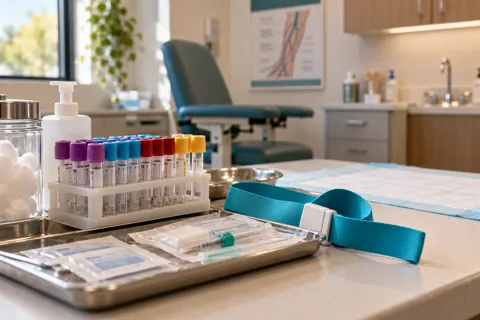
Read the notes and situation →Specimen quality begins before puncture and continues through to the laboratory. Identity, collection conditions, labelling and transport determine result reliability as much as the procedure itself.
Read the notes and situation →A blood culture looks for microorganisms in blood. Collection quality determines interpretation: contamination can expose a patient to unnecessary tests and treatment, while insufficient sampling can reduce yield.
Read the notes and situation →Oxygen is a treatment with explicit administration and monitoring requirements. The aim is oxygenation suited to the situation, with clinical reassessment, rather than routinely maximising saturation.
Read the notes and situation →A useful capillary glucose result is correctly attributed, technically reliable and interpreted alongside symptoms. Safety includes preventing bloodborne transmission and having a clear response to discordant readings.
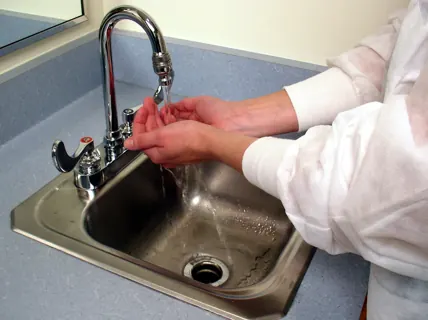
Read the notes and situation →Hand hygiene is guided by contacts and risks throughout care. Gloves provide protection when indicated but never replace this reasoning.
Read the notes and situation →Dressing selection follows assessment of the wound and its context. Describing change, addressing pain and recognising deterioration help adjust the care plan.
Read the notes and situation →Useful monitoring connects reliable measurements, their trend and an organised response. This adult guide uses the service’s individualised plan for escalation thresholds and observation frequency.
Read the notes and situation →Pressure injury prevention centres on actual mobility, skin assessment and sustained offloading of threatened areas. A suitable mattress helps but does not replace individualised repositioning.
Read the notes and situation →Mobilisation aims to maintain ability and comfort while preventing falls and pressure injury. Plan it with the patient according to clinical condition, prescribed restrictions and the team’s competencies.
Read the notes and situation →These headings organise the programme. They are not usable protocols until an approved sheet is published.
Your sessions, favourites and reading markers remain in Mon MICA. Activity does not certify clinical competence.