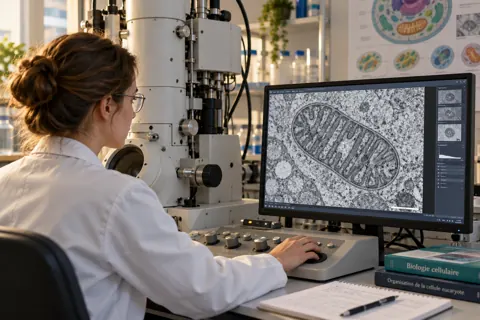



Investigate multisystem disease
Connect the phenotype to its mechanism and select confirmatory investigations.
The interface is available in English. Medical content currently remains in French; English medical editions will be added after scientific review.
© 2026 MICA — Médecine Interne Campus Algérie
Soraya Ayoub & Salim Larbani. Tous droits réservés.
LEARN AND EXPLORE
Choose an area to find its topics and related resources.
1 topic and related resources
Explore4 topics and related resources
Explore1 topic and related resources
Explore1 topic and related resources
Explore
Explore inherited and multisystem diseases by family, with links to specific resources and reference protocols.
LEARNING PATHWAYS
7 courses · 56 chapters · 7 clinical cases
Connect the phenotype to its mechanism and select confirmatory investigations.
Distinguish clinical patterns, useful tests and disease-specific treatments.
Identify emergencies, organise treatment and plan family follow-up.
Expandable chapters, comparison tables, original diagrams and fictional clinical cases with explanations. Course text is in French.
MICA · CLINICAL LEARNING
Recognising a rare disease relies on unusual combinations of findings and a well-defined unresolved clinical question. The approach connects phenotype, family history, functional or metabolic testing and specialist interpretation of results.
Reconstruct age at onset, affected organs, episodes triggered by intercurrent illness and family history across generations when possible. Apparently unrelated findings may share one mechanism. Mitochondrial diseases, Lysosomal storage diseases and Wilson disease require different diagnostic pathways. Avoid attributing every abnormality to one rare hypothesis at the expense of common, treatable causes.
[1][2]Define what each investigation should demonstrate: functional deficiency, substrate accumulation, tissue abnormality or a molecular mechanism. Check sampling requirements and method limitations with the specialist laboratory. A negative genetic test has different implications depending on the genes, tissues and abnormalities assessed. A variant of uncertain significance must not independently establish a diagnosis or drive a major treatment decision.
[2][1]Rarity does not reduce the urgency of respiratory, cardiac, neurological or metabolic decompensation. Obtain any existing individual instructions and contact the specialist team. Hereditary angioedema illustrates the value of an accessible emergency plan and suitable education; threatened airways require immediate care. An uncertain diagnosis must not delay life-saving treatment.
[3][1]Refer with a short summary of chronology, phenotype, reliable investigations and the precise question. Coordinate genetic counselling, indicated family screening, organ monitoring and functional support. Reconsider an old conclusion when the phenotype changes or new interpretation becomes available. Explain uncertainties and treatment limitations; patients remain central to goals and decisions.
[2][1][3]FICTIONAL SITUATION · WITHOUT A SCORE
Fictional situation: a genetic result reports a variant of uncertain significance. The patient wants to tell relatives that they have the same disease.
What clarification is needed?
Explain that the finding alone does not establish disease or a defined familial risk. Review the phenotype and obtain clinical genetics interpretation, with further investigation or reanalysis where appropriate. Family counselling and relatives’ testing depend on that assessment; do not turn laboratory uncertainty into an announced diagnosis.
Original educational synthesis for adult internal medicine. Individual care depends on the clinical setting, applicable product information and local pathways. These notes are not an institutional protocol or a certification. Independent human scientific review remains to be confirmed.