Watch and understand
Videos · 3:52TEACHING RESOURCE M0029
Mini-CEX: observing a clinical history
An Australian Medical Council demonstration of observing a cardiovascular history-taking encounter.
AMC
Free MICA accountOpen
MICA
IMAGES · VIDEOS · AUDIO
One place for visual clinical learning, demonstrations and listening. Find a precise resource, explore it in context and return to your MICA course or book.
FIND YOUR RESOURCE
47 resources found
TEACHING RESOURCE M0029
An Australian Medical Council demonstration of observing a cardiovascular history-taking encounter.
AMC
TEACHING RESOURCE M0033
An individual MSD Manual recording of crackles, attributed to David W. Cugell.
MSD · D. W. Cugell
TEACHING RESOURCE M0034
Movie 3 from “Lung Ultrasound: The Essentials”, illustrating B-lines in a pulmonary oedema context.
Marini et al. · RSNA
TEACHING RESOURCE M0035
An individual MSD Manual recording of wheezing, attributed to David W. Cugell.
MSD · D. W. Cugell
TEACHING RESOURCE M0039
A demonstration of both manoeuvres, selected by the Open RN teaching manual.
Brigitte NP
TEACHING RESOURCE M0044
A tutorial selected by Alder Hey Children’s NHS Foundation Trust in a sickle-cell information leaflet.
Sélection Alder Hey NHS
 Images
MICA IMAGES A0001
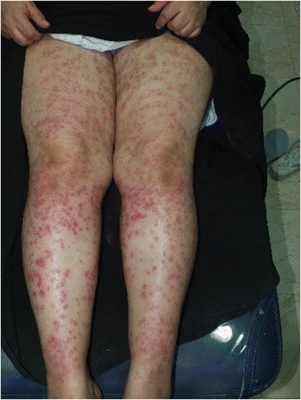
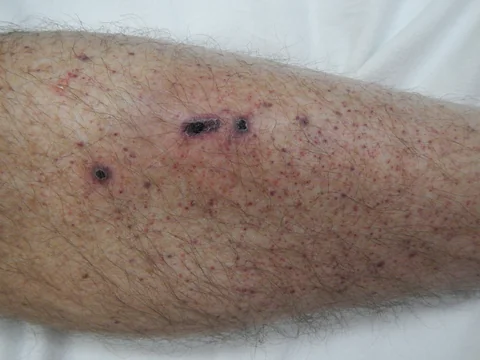
Haemorrhagic spots that persist under pressure; elevation and systemic findings guide assessment.
Abdullah Al-Hargan; Yasser A. Ghobara; Ahmad Al-Issa · Purpura après épilation laser documenté · https://link.springer.com/article/10.1186/s13256-018-1604-4 · CC BY 4.0
 Images
 Images
MICA IMAGES A0003
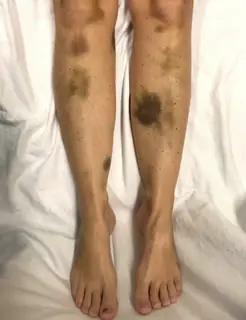
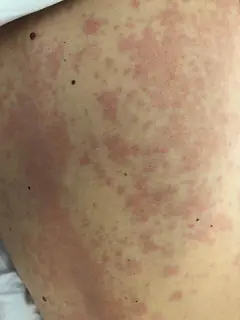
Areas of bleeding beneath intact skin, described with their extent and context.
James Heilman, MD — Echymosis.jpg — CC BY-SA 4.0 — https://commons.wikimedia.org/wiki/File%3AEchymosis.jpg
 Images
 Images
MICA IMAGES A0005
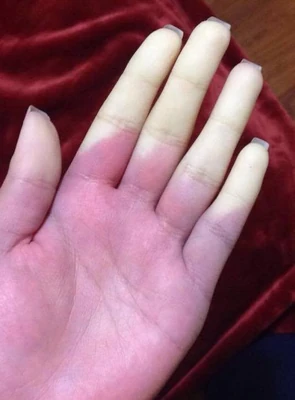
Episodic finger colour changes after cold or stress, characterised through clinical history.
MSM98 · Phénomène de Raynaud · https://commons.wikimedia.org/wiki/File:Raynauld.jpg · CC BY-SA 4.0
 Images
MICA IMAGES A0006
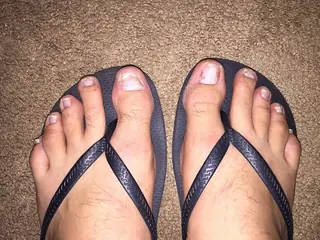
Nail plate and bed abnormalities: pitting, separation, salmon patches or hyperkeratosis.
JVO27 — NailPsoriasis.JPG — CC BY-SA 4.0 — https://commons.wikimedia.org/wiki/File%3ANailPsoriasis.JPG
LEARN IN CONTEXT
Ten interpretation tracings and two cardiology-station resources for comparing rhythm, conduction and repolarisation.
13 resourcesTwo auscultation recordings, an ultrasound loop and an incentive-spirometry demonstration.
8 resourcesThe Kernig and Brudzinski demonstration and the CT image from the thunderclap-headache station.
5 resourcesSchistocytes, an Auer rod and sickle cells: three individual images for refining morphological description.
10 resourcesA parasitology image and two separate CDC procedures: thick and thin blood films.
4 resourcesStill disease, cognitive bias and ANA interpretation: relate a result to a clinical question.
6 resourcesFour videos for discussing infection prevention, methotrexate safety and assessment of urgent presentations.
6 resourcesPresentations, handovers, shared decisions, disclosure of harm and bad news: prepare a conversation or role-play.
6 resourcesOne-Minute Preceptor, feedback, Mini-CEX and Gibbs’ cycle connect clinical observation, reflection and development.
4 resourcesA critical-appraisal approach and an NNT demonstration for preparing a journal club.
2 resourcesLearn, teach and supervise: media from the guide and five diagrams from the teaching dossier, with precise sources and QR codes.
35 resourcesThe images, videos and sounds from the collection’s six stations, retaining each station’s original labels.
14 resourcesEight course diagrams covering examination domains, catatonia, cognition, thought, perception, mood and safety.
8 resourcesFour atlas resources connected to the revised vascular examination course, blood-pressure measurement and ABI exercises.
4 resourcesClinical photographs, fictional teaching cases and questions from the personal collection of Dr H Mehani and Dr S Larbani. The images are available in the reader after signing in.
Browse the photo collection →Each media sheet has a permanent MICA link and a QR to use in a teaching handout or a presentation. On your phone, open the link directly.
Sources, access and QR codes →